The Growth Problem No Dashboard Can Fix
Most large consumer organizations are not short on data, channels, or marketing technology.
What they are short on is decision coherence.
Customers interact with brands across web, mobile, contact centers, branches, and service journeys. Yet most enterprises still decide what to say or do next inside disconnected tools, teams, and KPIs.
The result is familiar:
- Competing offers across channels
- Irrelevant outreach that erodes trust
- Marketing lift without retention impact
- Personalization that looks sophisticated – but behaves randomly
This is not a tooling gap.
It is a decisioning gap.
The Strategic Shift: From Campaign Execution to Enterprise Decisioning
At scale, growth no longer comes from sending more messages. It comes from making better decisions, faster, and consistently – every time a customer engages.
This is where platforms like Pega Customer Decision Hub (CDH) create executive-level value.
CDH is not a marketing platform.
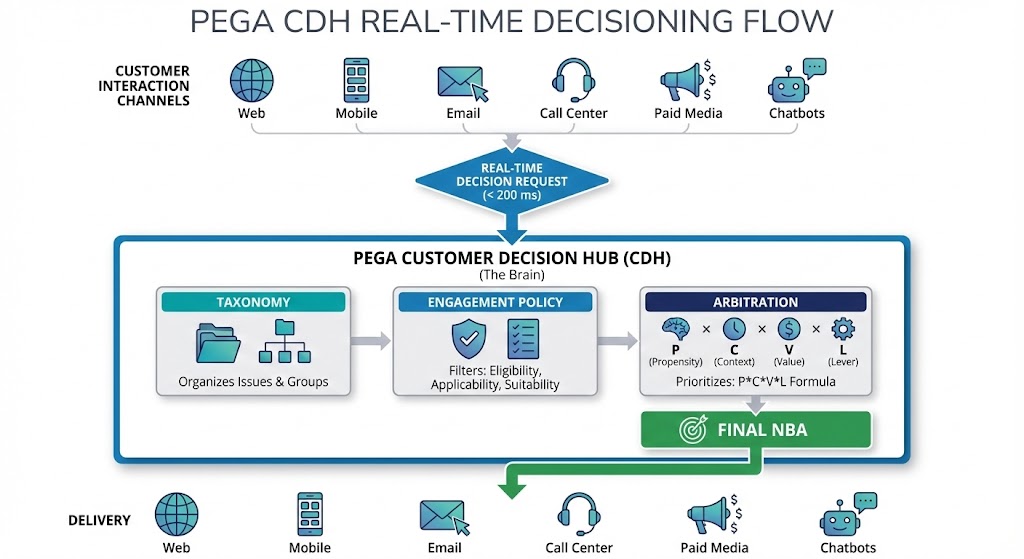
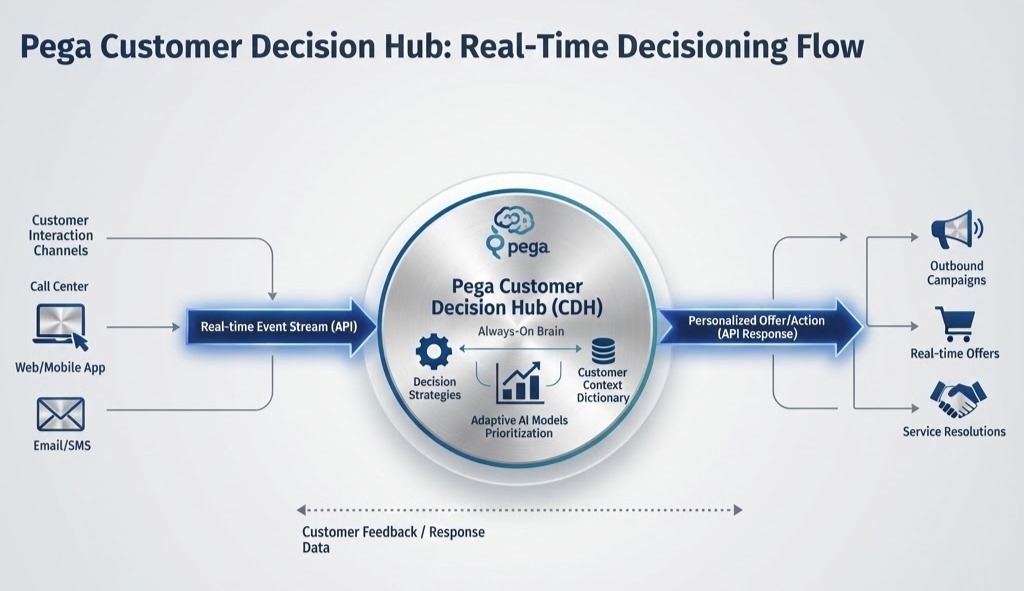
It is an enterprise decision engine that determines the single best action for each customer, in real time, across all channels—balancing customer value, business objectives, and regulatory constraints.
For the C-suite, the investment question is simple:
Do we need a system that decides, in real time, how every customer interaction should progress?
If the answer is yes, CDH becomes a growth capability – not a line item.
Where the Investment Pays Off?
1. Scale Turns Marginal Improvements into Material Growth
In large B2C organizations, a 1–2% lift in conversion, retention, or product penetration is not incremental—it is transformational.
Decisioning platforms thrive where:
- Millions of customers generate continuous interaction data
- Small optimizations compound across journeys and time
- Learning accelerates with volume
This is why financial services, telecom, retail, and subscription businesses consistently lead adoption.
2. Channel Proliferation Demands Centralized Intelligence
Most enterprises already operate across five or more customer channels. What they lack is a single brain coordinating them.
Without centralized decisioning:
- Each channel optimizes locally
- Customers experience conflicting priorities
- Brand trust erodes through inconsistency
With enterprise decisioning:
- Channels become execution layers
- Strategy is enforced at the moment of interaction
- Customers experience one coherent conversation
This is not an efficiency play.
It is a brand integrity investment.
3. Real-Time Relevance Drives Customer Lifetime Value
Batch personalization optimizes for yesterday.
Customers live in now.
Decisioning platforms create value when:
- Context matters (intent, behavior, timing)
- Engagement must adapt instantly
- The cost of irrelevance is churn
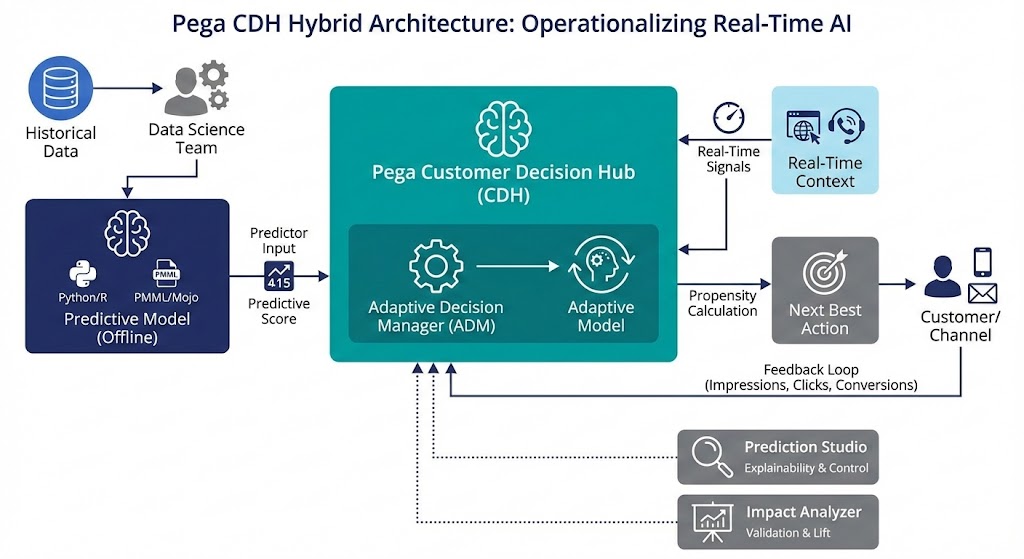
By learning continuously from customer responses, decision engines improve not just conversion – but long-term relationship economics.
4. Retention Becomes a Managed Outcome, Not a Reaction
Churn rarely announces itself.
It signals quietly through behavior.
AI-driven decisioning allows organizations to:
- Detect early risk patterns
- Intervene with proportionate actions
- Avoid over-incentivizing customers who would stay anyway
This shifts retention from reactive campaigns to portfolio-level optimization – a CFO-relevant outcome
When This Investment Does Not Make Sense?
Decisioning is powerful – but not universal.
It is not the right investment when:
- Customer volumes are small
- Interactions are infrequent or indirect
- The business model is purely transactional
- Regulatory constraints eliminate personalization entirely
In these cases, simpler tools outperform complex decision architectures.
Knowing when not to invest is as important as knowing when to scale.
The Board-Level Question
The real question is not:
“Do we need better personalization?”
It is:
“Do we need to make better decisions at every customer interaction – at enterprise scale?”
If growth depends on:
- Retention over acquisition
- Lifetime value over single transactions
- Trust over short-term conversion
Then enterprise decisioning becomes a strategic asset, not a marketing initiative.
And that is the lens through which platforms like Pega Customer Decision Hub should be evaluated.
Growth in the next decade will not be won by louder messages – but by smarter decisions.
Want to Ace your Pega Lead Decision Architect certification? Book a session with our LDA certification mentorship Team